
The Day(s) After Martin Luther King Day
Today is the day after Martin Luther King Jr. Day.
Maybe it’s just me, but the day itself doesn’t feel like it used to. Increasingly, the question doesn’t seem to be how we should remember Dr. King, but whether we should remember him with reverence at all. Conversations that once centered on his courage and leadership now pivot quickly to his theological convictions, his alleged moral failures, or the ways his life doesn’t fit neatly into the stories we learned in school. Those conversations aren’t new, but they feel louder, sharper, and more divisive than they have in the last several decades.
This past Saturday, I received a text from a pastor friend of mine named Sam in a group message with other Black pastors and ministry leaders like myself. He said:
“[Today] I’m thinking of the hundreds or thousands of preachers who came before us and were lynched with no justice, who were shunned from congregations, and who risked their lives just so we can freely be in those same churches today, leading those same flocks.”
He went on to say that it’s important for us to pause on moments like this weekend to collectively remember both the good and the bad, while embracing his (MLK’s) hope for our future. He ended with this simple but weighty line: “I have hope this morning, even when others don’t” (Romans 12:12).
I have that same Romans 12:12 hope as my brother Sam. And, it’s important to note that the same verse that tells us to “rejoice in hope” also tells us to be “patient in affliction” and “constant in prayer”.
Maybe it’s just me, but the day itself doesn’t feel like it used to. Increasingly, the question doesn’t seem to be how we should remember Dr. King, but whether we should remember him with reverence at all. Conversations that once centered on his courage and leadership now pivot quickly to his theological convictions, his alleged moral failures, or the ways his life doesn’t fit neatly into the stories we learned in school. Those conversations aren’t new, but they feel louder, sharper, and more divisive than they have in the last several decades.
This past Saturday, I received a text from a pastor friend of mine named Sam in a group message with other Black pastors and ministry leaders like myself. He said:
“[Today] I’m thinking of the hundreds or thousands of preachers who came before us and were lynched with no justice, who were shunned from congregations, and who risked their lives just so we can freely be in those same churches today, leading those same flocks.”
He went on to say that it’s important for us to pause on moments like this weekend to collectively remember both the good and the bad, while embracing his (MLK’s) hope for our future. He ended with this simple but weighty line: “I have hope this morning, even when others don’t” (Romans 12:12).
I have that same Romans 12:12 hope as my brother Sam. And, it’s important to note that the same verse that tells us to “rejoice in hope” also tells us to be “patient in affliction” and “constant in prayer”.

Thlipsis is a word used outside of the New Testament to talk about things like crushing grapes, being squeezed in a narrow space, or physical pressure that restricts movement. (Source)
As someone who is almost comically claustrophobic, this is a terrifying word in every sense.
Now, I realize that the affliction Paul has in view in Romans 12:12 most likely refers to the physical opposition and persecution faced by the early church for proclaiming the name of Jesus. I don’t want to belittle that thlipsis. Nor am I trying to equate our present experiences with the thlipsis endured by the Black pastors and ministers who came before me that my brother mentioned in his text.
At the same time, I don’t think it’s a stretch to say that thlipsis still very much exists in conversations about race today.
In today’s cultural and political climate, believers who hold firm to the conviction that the multi-ethnic thread of redemption woven throughout Scripture calls us to intentionally pursue multi-ethnic local churches where possible often find ourselves pressed from multiple directions. And that pressure comes not only from outside the church, but at times from within it as well.
That’s part of why I’m writing this the day after Martin Luther King Day. Because it’s relatively easy to speak of hope on a Monday in January. It’s easier to post a quote, share an article, and acknowledge a legacy when the calendar tells us to. What’s harder, but what matters even more, is clinging to that same hope, remaining patient under pressure, and being faithful in prayer during the 364 days that follow.
Now, I realize that the affliction Paul has in view in Romans 12:12 most likely refers to the physical opposition and persecution faced by the early church for proclaiming the name of Jesus. I don’t want to belittle that thlipsis. Nor am I trying to equate our present experiences with the thlipsis endured by the Black pastors and ministers who came before me that my brother mentioned in his text.
At the same time, I don’t think it’s a stretch to say that thlipsis still very much exists in conversations about race today.
In today’s cultural and political climate, believers who hold firm to the conviction that the multi-ethnic thread of redemption woven throughout Scripture calls us to intentionally pursue multi-ethnic local churches where possible often find ourselves pressed from multiple directions. And that pressure comes not only from outside the church, but at times from within it as well.
That’s part of why I’m writing this the day after Martin Luther King Day. Because it’s relatively easy to speak of hope on a Monday in January. It’s easier to post a quote, share an article, and acknowledge a legacy when the calendar tells us to. What’s harder, but what matters even more, is clinging to that same hope, remaining patient under pressure, and being faithful in prayer during the 364 days that follow.
Dr. King knew this. Near the end of his life, he gave a speech at the Southern Christian Leadership Conference on August 16, 1967, in Atlanta, Georgia, and he said:
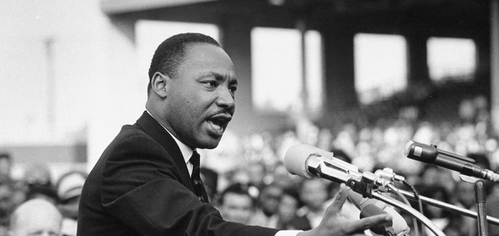
"I must confess, my friends, the road ahead will not always be smooth. There will be still rocky places of frustration and meandering points of bewilderment. There will be inevitable setbacks here and there. There will be those moments when the buoyancy of hope will be transformed into the fatigue of despair.... Difficult and painful as it is, we must walk on in the days ahead with an audacious faith in the future."
That sounds pretty close to Paul’s call in Romans 12:12. To rejoice in hope while remaining patient under thlipsis and constant in prayer.
As I look around the nation today, like my brother Sam, I’m genuinely encouraged.
By God’s grace alone, our church is growing, and each week I see men, women, and children from different cultures, backgrounds, and stories standing side by side, worshiping the same Savior.
By God’s grace alone, our church is growing, and each week I see men, women, and children from different cultures, backgrounds, and stories standing side by side, worshiping the same Savior.
And whatever criticisms people may raise about Martin Luther King Jr., our church would not look the way it does today without him. The reality that people from different races and backgrounds can worship together freely is not something we stumbled into. The fact that I can pastor a congregation where the majority of people look nothing like me is not accidental.

It is the result of costly leadership and hard-won progress that reshaped the landscape in which churches like ours can now exist.
And we’re not alone in this.
I hear from pastors and churches across the country who are seeing the same quiet, beautiful work of God unfolding in their own congregations. And yet, there is pushback. Thlipsis is real, and it’s growing.
But my encouragement to anyone reading these words is not to retreat and not to grow weary, but to continue on rooted in the gospel that gives us hope, and to remain constant in prayer....even on the day(s) after Martin Luther King Day.
And we’re not alone in this.
I hear from pastors and churches across the country who are seeing the same quiet, beautiful work of God unfolding in their own congregations. And yet, there is pushback. Thlipsis is real, and it’s growing.
But my encouragement to anyone reading these words is not to retreat and not to grow weary, but to continue on rooted in the gospel that gives us hope, and to remain constant in prayer....even on the day(s) after Martin Luther King Day.
Sing a song full of the faith that the dark past has taught us,
Sing a song full of the hope that the present has brought us;
Facing the rising sun of our new day begun,
Let us march on till victory is won.
Sing a song full of the hope that the present has brought us;
Facing the rising sun of our new day begun,
Let us march on till victory is won.
Recent
Archive
2026
January
February
April
June
July
Day 7: The Gift of JoyDay 8: Wait for the LordDay 9: I Think I've Finally ArrivedDay 10: The Best Birthday CelebrationDay 11: Chronically NostalgicDay 12: When God Surrounds YouDay 14: Our Two Smallest MissionariesDay 13: The Goodbye I Wasn't Ready ForDay 15: Wheels Up...AgainWhy Do We Go There When There's Needs HereThe Final Chapter: Rwanda
2025
2024
June
July
October
November
The Gift of Seeking and Finding RefugeNeeded RestThe Lord is NearLessons in the DarknessWe will not fearWhere is my identity?The Power Behind the Armor of GodBoasting in Christ AloneWhat Does It Mean To Serve?Dying to Christ DailyThe Blessing at the BottomDoing & FeelingBring Your Tears to the LordSitting in MessyCreated in Christ for Good WorksFaithful Love is God's Multitude of MerciesCan't Stop, Won't Stop
No Comments